Road safety is a public-health priority and a cornerstone of modern mobility systems. Each year, traffic collisions claim lives, cause serious injuries, and impose substantial social and economic costs on communities. As cities grow, vehicle fleets expand, and multimodal transport becomes more complex, effective road safety equipment plays a decisive role in reducing risk and improving outcomes for all users—drivers, cyclists, pedestrians, and public-transport passengers. SafeNsure, as a conceptual or brand-focused initiative, represents the thoughtful integration of technology, human-centered design, and evidence-based deployment to make roads safer, more predictable, and more resilient.
The case for investing in road safety equipment is both moral and practical. From a humanitarian standpoint, preventing fatalities and disabling injuries preserves families, livelihoods, and community cohesion. From an economic viewpoint, reducing collisions lowers healthcare costs, limits lost productivity, and reduces the strain on emergency services. High-quality safety equipment—ranging from passive infrastructure (guardrails, reflective signage) to active systems (smart traffic signals, speed enforcement cameras)—works synergistically with education, regulation, and enforcement to create an environment where risk is managed and consequences are mitigated.
Why Choose Our Services
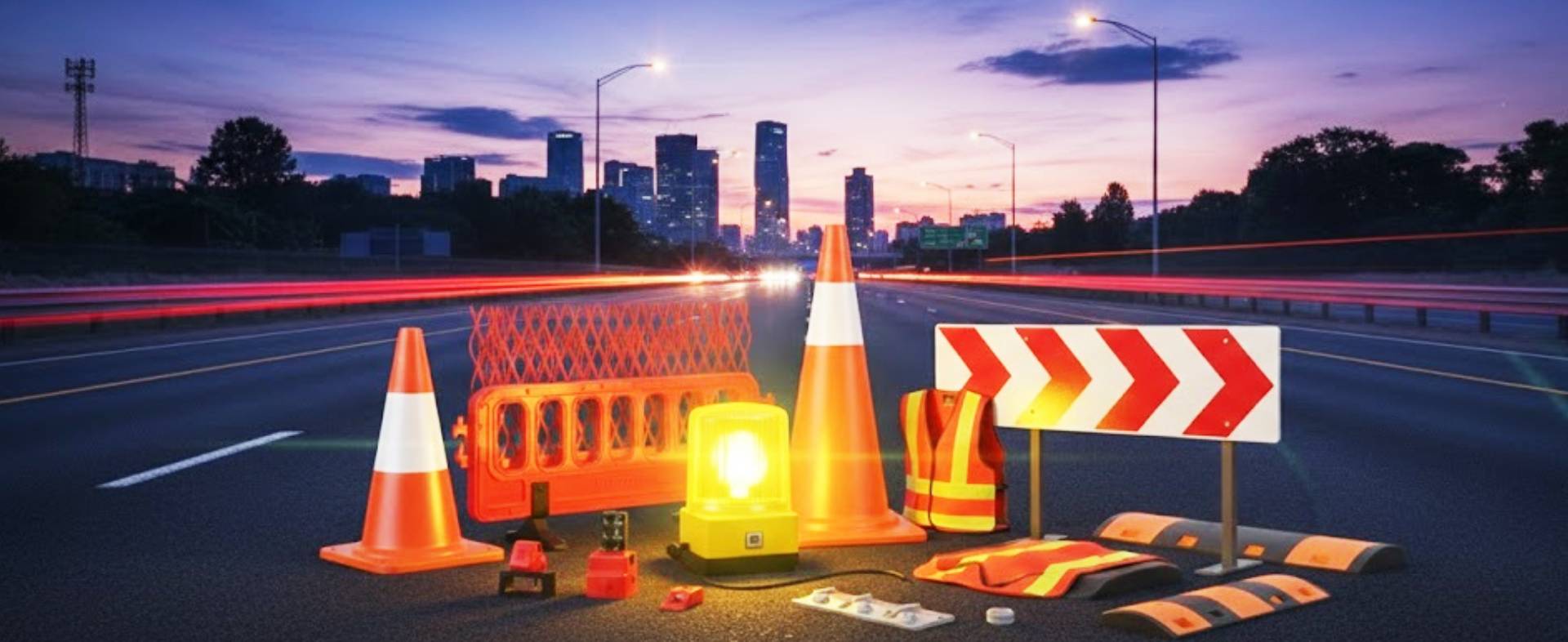
A hallmark of effective road safety equipment is that it matches the real-world contexts in which it operates. For example, well-designed pedestrian crossings incorporate high-visibility markings, curb extensions to shorten crossing distance, raised platforms that naturally slow vehicle speeds, and conspicuous lighting for night-time visibility. Cyclist-focused equipment includes protected lanes with physical separation, clear lane markings, and conflict-reducing intersection treatments such as advanced stop lines or dedicated signal phases. For high-speed corridors and highways, hardware such as energy-absorbing guardrails, median barriers, and rumble strips play vital roles in preventing run-off-road and head-on collisions.
enhanced efficiency
Technological advances have also broadened the toolkit available to road safety practitioners. Intelligent Transportation Systems (ITS) enable adaptive traffic signals that respond to real-time flows, reducing congestion and risky driver behaviors associated with stop-and-go traffic. Automated speed enforcement cameras and red-light cameras, when deployed transparently and paired with fair legal frameworks, have demonstrated consistent reductions in speeding and signal violations. Vehicle-to-infrastructure (V2I) communications and roadside units can provide warnings about hazards, work zones, or imminent signal changes, allowing drivers and automated safety systems to react sooner and more safely.
improved precision and quality
Design and implementation strategies must be grounded in data. Effective programs rely on comprehensive crash data analysis, road-user behavior studies, and post-deployment evaluations. This evidence-based approach ensures that equipment is prioritized where it will produce the greatest benefit—such as locations with high crash frequency or vulnerable-user exposure—and that interventions are adjusted based on observed outcomes. Metrics for success should include reductions in injury severity, decreases in crash counts, improved compliance with speed limits and traffic controls, and positive perceptions of safety among road users.
increased flexibility
Human factors and equity considerations are also essential. Equipment must be designed for diverse users, including children, older adults, people with disabilities, and those using different mobility modes. For example, audible crossing indicators benefit visually impaired pedestrians, while tactile paving assists those with limited vision. Equitable deployment ensures that historically underserved neighborhoods receive necessary interventions, rather than concentrating resources only in higher-income or high-profile areas.
safety and risk reduction
Maintenance and sustainability further determine long-term effectiveness. Reflective surfaces and signage must remain visible; detection equipment and sensors require calibration and software updates; physical infrastructure needs inspection and repair. Sustainable procurement and lifecycle planning reduce total cost of ownership and prevent degradation of safety gains over time. Moreover, community engagement during planning and maintenance phases fosters public trust, encourages safe behaviors, and helps identify local priorities that purely technical assessments might miss.
Planning & strategy
Finally, successful road-safety programs balance enforcement with education, incentives, and supportive policy. Equipment that makes safe choices easier—traffic-calming measures that reduce vehicle speeds, protected crossings that favor pedestrians, or signal timing that provides safe intervals—works best when accompanied by laws, public-awareness campaigns, and incentives for compliance. Partnerships among government agencies, private technology providers, non-profit advocates, and local communities amplify impact and accelerate innovation. In summary, SafeNsure encapsulates a comprehensive approach to road safety equipment: targeted, data-driven, human-centered, and sustainably managed. By combining well-designed physical infrastructure, advanced technologies, equitable deployment, and ongoing evaluation, communities can substantially reduce the toll of traffic collisions. Investing wisely in road safety equipment is an investment in public health, economic resilience, and the freedom of people to travel with confidence and dignity.
- needs assessment
- Timeline and Milestones
- Feasibility and ROI
- Technology Selection
- Process Optimization
- Scalability Planning
Frequently asked questions
We implement rigorous quality control measures at every stage of production, ensuring consistency and high standards.